


Ask anyone who has put off applying for an ITIN what actually stopped them, and you will hear the same answer. Not the form. Not the fee. The passport.
The standard route asks you to put your original passport in an envelope, post it to an IRS office in Texas, and wait two or three months for it to come back. If you travel for work, hold a visa appointment, or simply cannot risk being without your only identity document, that is a hard no. The good news is that you never have to do it. Below are six ITIN services that let you keep your passport, and exactly how each one works.
Key Takeaways
- Mailing your original passport is only required on the plain postal route. Every other option keeps it in your hands.
- The word that matters is certifying. A Certifying Acceptance Agent can verify your passport and send a Certificate of Accuracy to the IRS in its place. A plain acceptance agent cannot.
- Costs range from free at an IRS Taxpayer Assistance Center or a community programme, to roughly $150 to $300 for most online and high street options, up to about $500 at a law firm.
- Timing is largely fixed. Whichever route you choose, the IRS itself takes six to eleven weeks to issue the number, and longer during the January to April rush.
- If you live outside the United States, a certifying agent who verifies your identity online is usually the only route that genuinely keeps your passport at home.
- For families, certification is partial. Agents can certify a passport and birth certificate for dependents, but other dependent documents still have to reach the IRS as originals or certified copies.
Why the IRS Asks for the Original at All
The IRS needs proof that you are who you say you are, and a photocopy proves nothing. So the basic rule is simple: send the document, or send a copy certified by the office that issued it.
That second option sounds fine until you try it. A certified copy from your passport office can take weeks and cost real money, and in some countries it is not offered to people living abroad at all. That gap is exactly what certifying agents fill, and it is the reason passport safe ITIN services exist in the first place.
The Word That Matters
There are two levels of IRS approved helper, and only one of them keeps your passport at home.
A plain acceptance agent can help you complete Form W-7 and review your application, but your original document still travels to the IRS. A Certifying Acceptance Agent checks the document in front of them, verifies it, and signs a Certificate of Accuracy. That certificate goes to the IRS instead of your passport.
Look for the word certifying. Some ITIN services advertise loosely and hope you will not ask. One phone call settles it, and it is the only question that really matters when you are comparing providers.
The Six Options at a Glance
| Option | Typical cost | Where it works | Best for |
|---|---|---|---|
| itin.so | $197 standard, $297 express | Online, worldwide | Applicants outside the US |
| Local certifying agent | $150 to $475 or more | In person, US | People who want a named contact |
| IRS Taxpayer Assistance Center | Free | In person, US only | US residents who are not in a hurry |
| H&R Block office | Varies by branch and season | In person, US | People already filing a return there |
| Jackson Hewitt office | Varies by franchise | In person, US | Applicants near a listed franchise |
| Community or nonprofit programme | Free or very low | In person, US | Tight budgets, seasonal availability |
1. itin.so
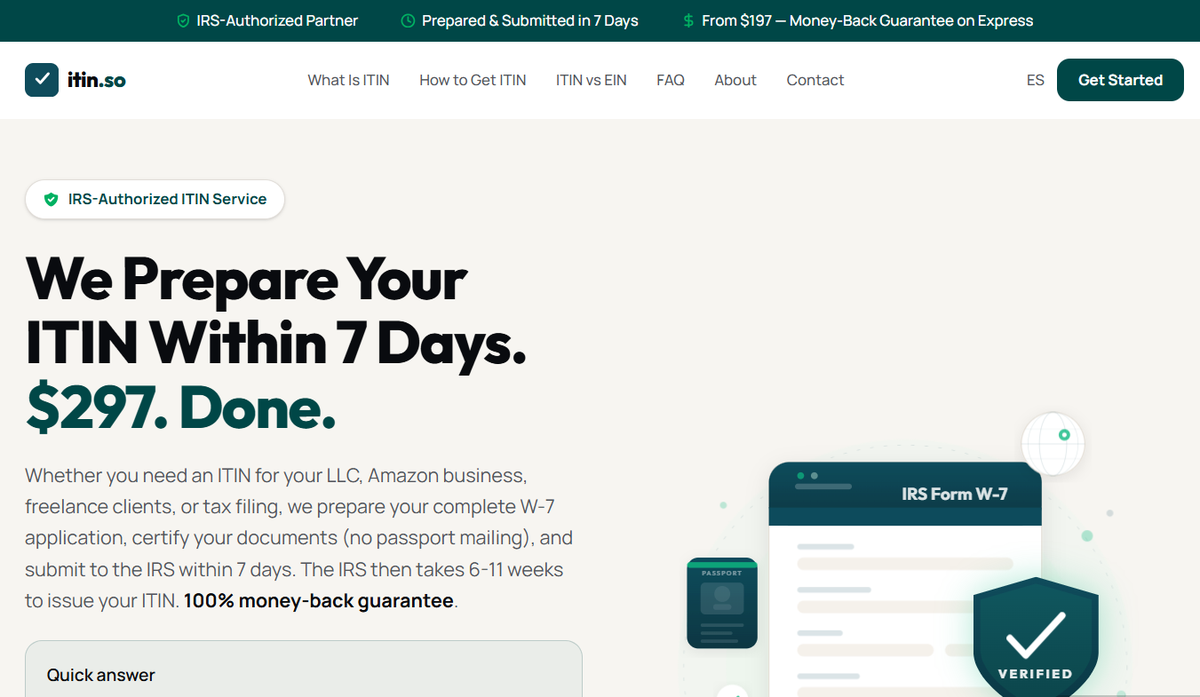
This is the option for people who are nowhere near a US office. Itin.so works as a Certifying Acceptance Agent partner, so your identity check happens online and your passport never enters an envelope.
Standard service costs $197 and express costs $297. In both cases the W-7 is prepared, your documents are certified, and the application is filed within seven days. After that the IRS takes its usual six to eleven weeks to issue the number, which is the same wait everyone faces regardless of who filed for them.
Of all the ITIN services on this list, this one is built specifically for applicants living outside the United States, which is where posting a passport carries the highest risk. An envelope that goes missing between two countries is a very different problem from one that goes missing between two US states.
2. A Local Certifying Agent
Many small accountancy practices and tax attorneys hold certifying status. You book a slot, they check the passport across the desk, and it is back in your bag within minutes.
Fees range widely, from around $150 at a small practice to $475 or more at a law firm. What you get for the higher price is a named person who will chase the IRS if a notice arrives, answer the phone when you call, and handle a rejection without you starting from scratch. Among in person ITIN services, this route gives you the most attention per applicant.
The catch is simple availability. Certifying agents are unevenly distributed, and a town with three accountancy firms may have none that hold the status.
3. An IRS Taxpayer Assistance Center
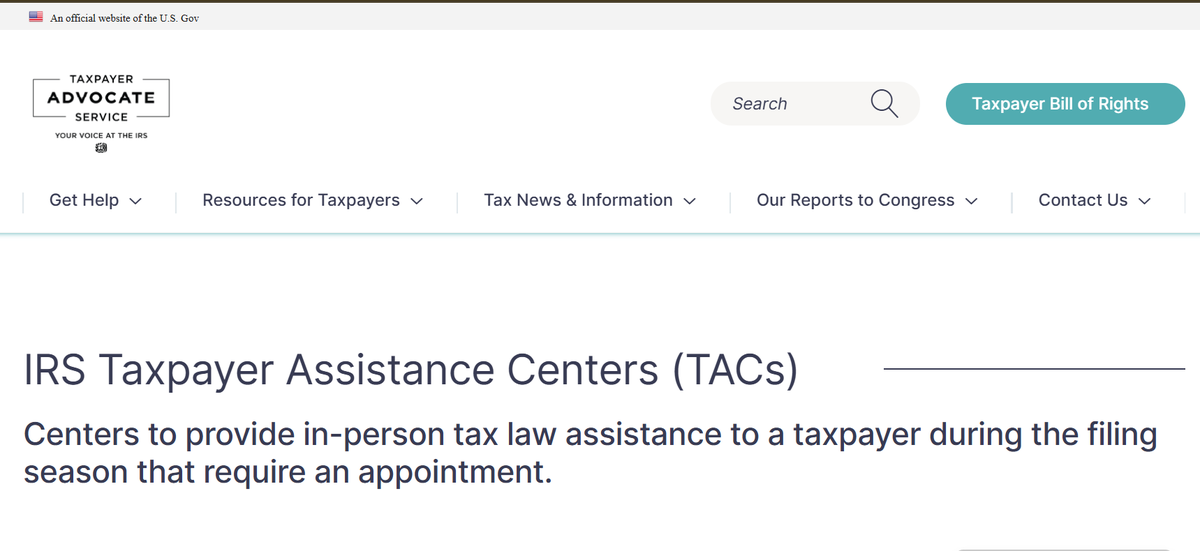
This one is free, and hardly anyone knows about it. Staff at these IRS offices can review your documents in person, hand them straight back at the same visit, and forward the application themselves. Nothing gets posted anywhere.
The catch is access. You must book ahead, waits for an appointment can run into weeks, and only some centres handle ITIN work at all. If you live near one and are not in a hurry, it beats every paid option on price. If you live abroad, it is not a choice at all.
4. H&R Block Offices

Some H&R Block branches have staff approved as certifying agents, and the brand is easy to reach in most US towns. If you already file a return with them, both jobs can fit into a single visit.
Not every branch offers it, so call first and ask for a certifying agent by name rather than asking whether the office "does ITINs". Fees change by location and tend to rise during the busy filing months. As high street ITIN services go, this is the easiest option for people already living in the US.
5. Jackson Hewitt Offices

Jackson Hewitt runs a franchise network, and some offices list an approved agent on staff. The set up is the same as anywhere else in person. You bring your papers, they check them, and you walk out with them.
Because franchises set their own services and prices, check both before you travel. Check the IRS list too, and make sure the specific office is named on it rather than just the brand. That single check saves more wasted trips than anything else about choosing between ITIN services.
6. Community and Nonprofit Programs
This is the overlooked route. Immigrant support groups, community centres and free tax help sites often hold certifying status, and many charge little or nothing.
The trade offs are waiting lists and short seasons, since several only run during the filing months. If money is tight, though, these are the best value on the whole list, and the staff usually handle these exact cases every day of the week.
How to Check Before You Hand Anything Over
The IRS publishes a list of approved agents by state and by country, and anyone can search it. If a firm claims certifying status and is not on that list, stop there.
Then ask two questions. Will my passport stay in my hands? And what happens if the IRS rejects the application? A good provider answers both without pausing. Weaker ITIN services turn vague at exactly this point, which tells you plenty before you have paid anything.
One Limit Nobody Explains
The rules are not the same for every person named on the form. A certifying agent can verify every supporting document for the primary applicant and their spouse. For children and other dependents, the agent can certify a passport and a birth certificate, and that is the extent of it.
Any other dependent document still has to reach the IRS as an original or as a copy certified by the issuing agency. So a family application is often partly passport safe rather than fully passport safe. Ask about this early, because it can change which of the ITIN services actually suits your household.
What This Costs and How Long It Takes
Prices run from nothing at an IRS centre or a community programme, to $150 to $300 for most online and high street options, up to around $500 at a law firm.
Timing is much steadier than price. A good filer will submit the form within a week or two. The IRS then takes six to eleven weeks, and longer during the January to April rush. Plan for roughly three months from start to finish whichever of the ITIN services you pick, and treat anyone promising a number in days as a warning sign rather than a bargain.
Choosing in One Minute
If you live outside the US, take the online certifying route. Nothing else genuinely keeps your passport safe across borders.
If you live in the US and have time to spare, book an IRS Taxpayer Assistance Center and pay nothing. If you want someone who will chase the IRS on your behalf, pay a local certifying agent. If you are on a budget, try a community programme first.
That is the whole map of the six ITIN services that let you keep your passport, and once you know where you live and how fast you need the number, the right answer usually picks itself.
Frequently Asked Questions
Do I ever have to mail my passport?
No. A certifying agent or an IRS Taxpayer Assistance Center checks the original and returns it to you. Only the plain postal route asks you to send it away.
How long would the IRS keep my passport?
On the postal route, expect two to three months. That is the wait most applicants are trying to avoid.
Is the free IRS option any slower?
Getting the appointment can take weeks. The ITIN wait afterwards is the same six to eleven weeks as any other route.
Can I do this from another country?
Yes. Online certifying agents serve clients worldwide, and the IRS list also names approved agents based in other countries.
What if my application is rejected?
You refile with the errors fixed and the clock restarts. Ask any provider in advance whether refiling is included in the price you paid.