

What AI Voice Generators Can Actually Do in 2026 (And What Still Requires a Human)
AI voice generation has come a long way from the robotic text-to-speech tools of a few years ago. Today, you can generate voiceovers that most listeners genuinely cannot distinguish from a human recording, at least under the right conditions.
But there is a gap between what these tools are capable of in a demo and what they actually deliver in real-world use. If you are a content creator, developer, marketer, or business owner evaluating AI voice tools, understanding that gap matters more than the headline features.
This article covers what modern AI voice generators genuinely do well, where the limitations are real rather than theoretical, and what the technology still cannot replace — no matter how impressive the demos look.
How AI Voice Generation Actually Works
Before getting into capabilities, it is worth understanding what is happening under the hood, because it explains both the strengths and the failure modes.
Modern AI voice generators use neural text-to-speech models trained on large datasets of human speech. The model learns the acoustic patterns, pitch, rhythm, intonation, pacing, emphasis, that characterize natural-sounding speech. When you feed it text, it predicts what a human voice would sound like reading that text and synthesizes audio accordingly.
The better models go further. They handle prosody, the natural rise and fall of speech, and can adjust emotional tone based on context. They understand that a question sounds different from a statement, that a dramatic pause before a key phrase adds emphasis, and that reading a list aloud requires a different cadence than reading narrative prose.
What they are doing, ultimately, is pattern matching at a very high level of sophistication. This is why the results can be genuinely impressive and also why edge cases still trip them up in ways that a human reader would handle instinctively.
What AI Voice Generators Are Actually Good At
Producing Consistent, Scalable Voiceover at Volume
This is the strongest use case and the one where the business case is most compelling. A human voice actor can record maybe one to two hours of finished audio per day. An AI voice generator can produce the same volume in seconds.
For content creators producing YouTube videos, e-learning courses, explainer videos, or podcast intros at scale, that speed difference is transformative. You are not replacing a single recording session, you are enabling a content production pipeline that simply would not be economically viable with human talent at every step.
Access to 200-plus realistic voices across 35 or more languages means you can match voice to content tone, target audience, and language without coordinating with multiple voice actors across time zones. For teams producing multilingual content, this alone changes the economics of localization entirely.
Handling Standard Narration Reliably
Clear, well-written narration scripts produce consistently good results with modern AI voice tools. Corporate training videos, product explainers, e-learning modules, and presentation voiceovers all fall into this category.
These are contexts where the listener is focused on absorbing information rather than evaluating the speaker's charisma. A clear, well-paced AI voice that does not stumble or mispronounce industry terms works well here.
Pronunciation accuracy has improved significantly. Specialized terminology, brand names, and technical terms, the things that used to require extensive customization — are handled more reliably now, particularly by models that have been trained on domain-specific speech data.
Multilingual Content Without Proportional Cost Increases
Traditionally, producing voiceover content in five languages meant paying five voice actors, managing five recording sessions, and dealing with five different availability windows. AI voice generation collapses that to a single production step.
The quality varies by language, AI voices for major languages like English, Spanish, French, German, and Portuguese are significantly better than for lower-resource languages — but for global content teams, the ability to produce consistent-quality audio across a large number of languages from a single platform is genuinely useful and was not practically possible even three years ago.
Rapid Iteration During Content Development
One underappreciated use case is using AI voice during the draft and review phase of content production, even if you plan to use a human voice actor for the final version.
Hearing how a script sounds dramatically changes how you edit it. Awkward constructions that read fine on the page become obvious when you hear them. Pacing issues, repetitive sentence structures, and sections that run too long are all easier to catch in audio form.
Using an AI voice generator to produce working drafts lets you iterate on the script with audio feedback before committing to a studio recording session. Platforms like Murf give you enough voice variety and control — pitch, speed, emphasis, pauses, to simulate how different narrators would deliver the same script, which is useful information before you go into final production. The time savings in the final production phase often justify the tool even if you never publish an AI-voiced version.
Where the Limitations Are Real
Genuine Emotional Range Remains Constrained
This is the clearest dividing line between AI and human voice performance. An AI voice generator can produce a voice that sounds calm, confident, warm, or energetic. What it cannot do is generate the micro-variations in emotional expression that a skilled human performer brings to a script.
A human narrator reading a product story will naturally vary their delivery in ways that feel unscripted, a slight catch in the voice at an emotional moment, a subtle acceleration when conveying excitement, a particular quality of warmth that comes from the performer actually connecting with the material. AI models produce statistically plausible emotional output rather than genuinely felt delivery.
This matters most for long-form content where listener engagement depends on the narrator's personality coming through, for storytelling content where emotional authenticity is the point, and for any context where the audience has sophisticated expectations about voice performance.
Complex Prosody in Ambiguous Text
AI voice generators still struggle with text where the intended prosody is ambiguous without contextual knowledge the model does not have.
Consider a sentence like: "She never said he stole the money." That sentence has six different meanings depending on which word you emphasize. A human reader who knows the context of the surrounding content will emphasize the right word automatically. An AI model is making a probabilistic guess.
For most standard content, this is not a meaningful problem because the text is written clearly and the intended reading is unambiguous. But for creative content, persuasive copy, or any script where nuanced delivery matters, you will sometimes hear a line read in a way that is technically correct but tonally wrong — and fixing it requires either rewriting the text or using pitch controls to manually adjust the output.
Irregular and Invented Words
Proper nouns, invented terminology, acronyms, and words from other languages embedded in English text are still a reliability issue. Most modern tools have improved significantly here, but errors are more common with less standard vocabulary.
The practical workaround is building a pronunciation dictionary for your specific content, most enterprise-grade tools support custom pronunciation rules, but this adds overhead that many users do not anticipate when they first start working with the tools.
Where Human Voice Still Wins
High-Stakes Brand Content
For content that will be your primary brand voice, the spokesperson for your company, the narrator of your brand story, the voice your customers associate with your identity, the case for human talent remains strong.
The reason is not purely about quality. It is about authenticity and the relationship between voice and brand. A human voice actor can own a role in a way that creates genuine brand equity over time. An AI voice is a capable utility, but it does not have a personality that can grow with your brand.
There is also a practical consideration: the AI voice models available today are not proprietary to your brand. Competitors can use the same voices. For commodity content production, this does not matter. For brand-defining audio, it does.
Voice cloning changes this equation somewhat, you can clone a human voice to create a brand-specific AI voice that maintains consistency at scale while retaining the distinctiveness of a real person's voice. But this introduces its own complexity and ethical considerations around consent and usage rights.
Live and Conversational Contexts
Even the best AI voice technology has historically struggled with truly conversational delivery, the natural interruptions, the self-corrections, the dynamic adjustment to audience response that characterizes skilled live speakers.
This is particularly relevant for the rapidly expanding category of AI voice agents. Real-time voice agents for customer service, sales, and support use AI voice generation, but the challenge is not just voice quality, it is latency, natural turn-taking, handling interruptions gracefully, and maintaining conversational coherence across multi-turn exchanges.
The technology has improved substantially. Modern voice agent platforms are achieving sub-800ms response latency with natural-sounding voices, getting meaningfully close to the performance that makes a voice conversation feel natural rather than mechanical. But anyone who has had a frustrating interaction with a poorly implemented voice bot knows that the gap between technical capability and delivered experience can be significant. The infrastructure around the voice — the conversation flow design, the handling of edge cases, the escalation logic to human agents — often matters as much as the voice quality itself.

Sensitive Human Content
Crisis communications, mental health content, grief counseling resources, and content that deals with significant human vulnerability all benefit from a real human voice in ways that go beyond technical capability.
Listeners respond differently to human voices in emotionally weighted contexts. The knowledge that a real person recorded this matters even when the listener cannot technically distinguish between the AI and human voice in a blind test. For content where that human connection is the point, AI voice generation is the wrong tool regardless of quality.
The Security Dimension Worth Understanding
One thing that does not get discussed enough alongside AI voice generation capabilities is the security landscape it has changed.
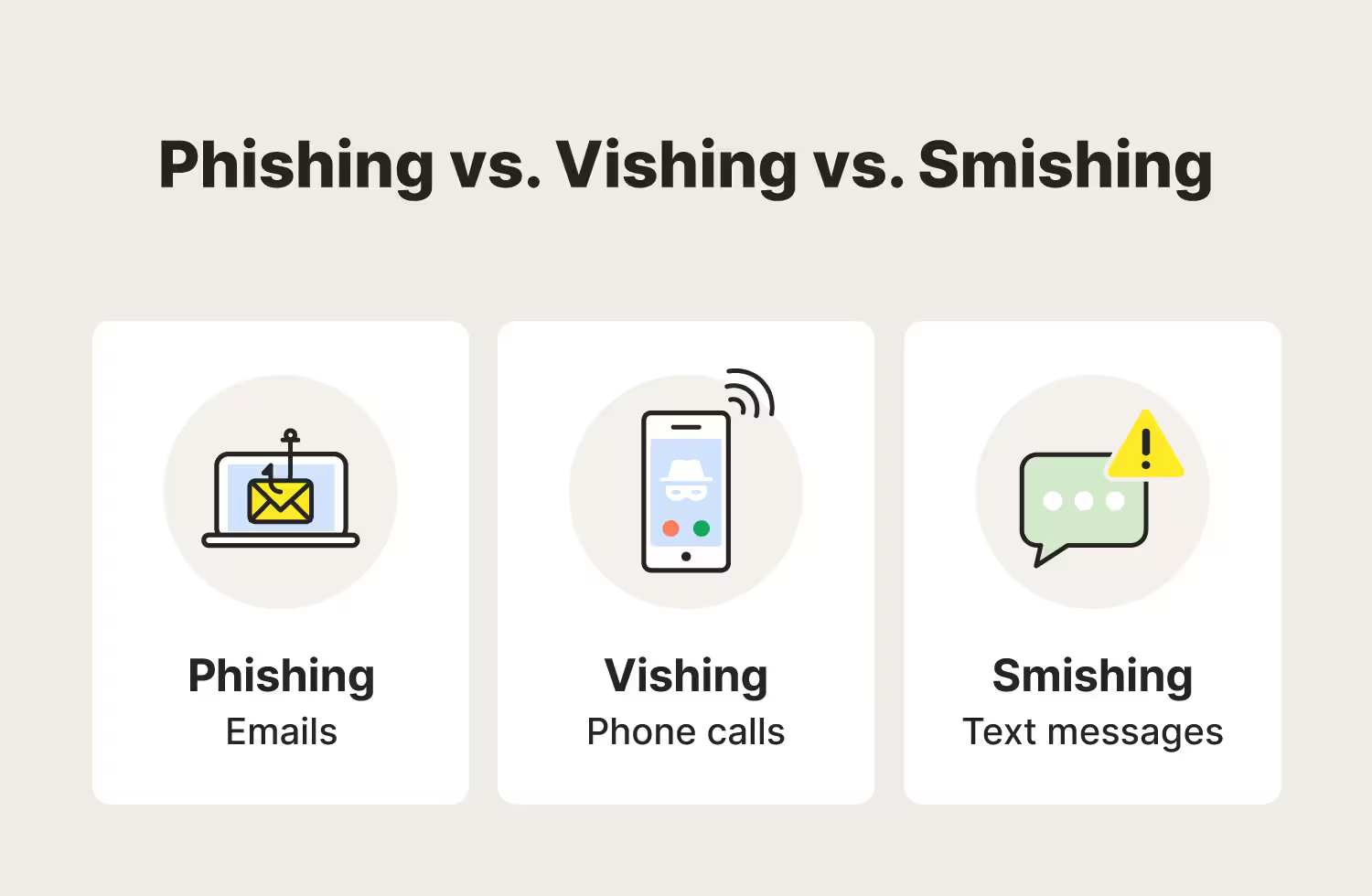
Realistic AI-generated voice has made certain types of social engineering significantly easier. Voice phishing, sometimes called vishing, now uses AI-generated voices to impersonate known individuals convincingly. Deepfake audio is used in business email compromise attacks, where an AI voice impersonating a CFO calls an employee to authorize a wire transfer.
This is not an argument against AI voice tools, which are neutral technology. But if you are a developer, creator, or business professional working in this space, awareness of these attack vectors is relevant.
The same sophistication that makes AI voice generation useful for legitimate content production makes it useful for deception. Vishing attacks increasingly pair voice calls with follow-up phishing links, designed to be clicked while the target is already disoriented by the interaction. Understanding what happens when you click a suspicious link, the immediate chain of events, what gets compromised, and how fast — is practical knowledge for anyone working professionally in the AI tools space, not just a general security awareness point.
For teams building or evaluating AI voice tools, this security context is part of the professional landscape now.
Practical Guidance for Choosing the Right Approach
The decision framework is simpler than it might appear.
Use AI voice generation when you need volume, consistency, or speed that human talent cannot provide at your budget. When you are producing standard narration where voice personality is less important than clarity. When you need multilingual output. When you are iterating on a script and want audio feedback before final production.
Use human voice talent when the voice is central to your brand identity. When the content is emotionally complex or sensitive. When delivery nuance genuinely changes meaning. When you are building a long-term voice relationship with an audience.
Use a hybrid approach when you have high-volume content where the bulk is standard narration but specific moments require genuine emotional performance. Or when you want to use AI voice for localization while maintaining a human voice for your primary language.
The most common mistake is applying a blanket policy in either direction. Teams that try to use AI voice for everything discover its limitations on content that actually needs performance. Teams that refuse to adopt AI voice at all leave significant production efficiency on the table.
Where the Technology Is Heading
The capability gap between AI and human voice is closing, though unevenly across different dimensions.
Pronunciation accuracy and natural prosody in standard content have improved dramatically over the last two years and continue to improve. Emotional range and genuine performance depth remain further behind and are harder technical problems.
Real-time voice AI for conversational applications is arguably the most active area of development, driven by the clear business value of automating high-volume phone-based interactions. Latency, voice quality, and conversation management capabilities are all improving faster than the content voiceover space.
Voice cloning is becoming more accessible and more accurate, which will change the brand voice question significantly — the ability to create a proprietary AI voice based on real human talent changes the calculus for brand content investment.
What will not change is the human dimension in contexts where it actually matters. The technology is a tool, and like all tools, its value depends on applying it to the right problems.
Frequently Asked Questions
Is AI voice generation good enough to replace voice actors in 2026?
For standard narration and high-volume content production, yes — AI voice tools have crossed the threshold of being genuinely useful rather than just technically interesting. For brand voice work, emotionally complex content, and performance-driven material, skilled human voice talent still produces meaningfully better results. The honest answer is that it depends entirely on the use case.
What is the difference between an AI voice generator and an AI voice agent?
An AI voice generator converts text to audio, producing a voiceover file for use in video or audio content. An AI voice agent is a real-time conversational system that listens, understands, and responds using AI-generated voice — designed for live interactions like customer support calls. Both use similar underlying voice synthesis technology but serve very different purposes.
How accurate is AI voice pronunciation for technical content?
Modern tools handle most technical terminology reliably, particularly with custom pronunciation dictionaries. Completely novel terms, proper nouns in unfamiliar languages, and highly specialized jargon still require manual adjustment. The best tools let you define custom pronunciations for your specific domain vocabulary.
Can AI voices be used commercially?
Yes, for most commercial platforms. Licensing terms vary by provider — some include commercial rights in all plans, others restrict commercial use to paid tiers. Always verify the specific terms for the platform you are using before publishing commercially.
How is AI voice being used in real-time customer interactions?
AI voice agents are increasingly handling inbound customer service calls, appointment scheduling, lead qualification, and support escalation. The technology is mature enough for high-volume, structured conversation flows where the range of expected inputs is defined and edge cases can be escalated to human agents. Fully open-ended, unstructured conversation at human quality remains a harder problem.
What should I watch out for when downloading or trying AI voice tools?
The AI voice tool space has attracted a significant number of fraudulent sites posing as legitimate tools. These range from fake free voice generators that install malware to phishing pages impersonating known platforms. Stick to established platforms with verifiable business histories, and be cautious about clicking links to AI tools from social media ads, unsolicited emails, or third-party download sites.